
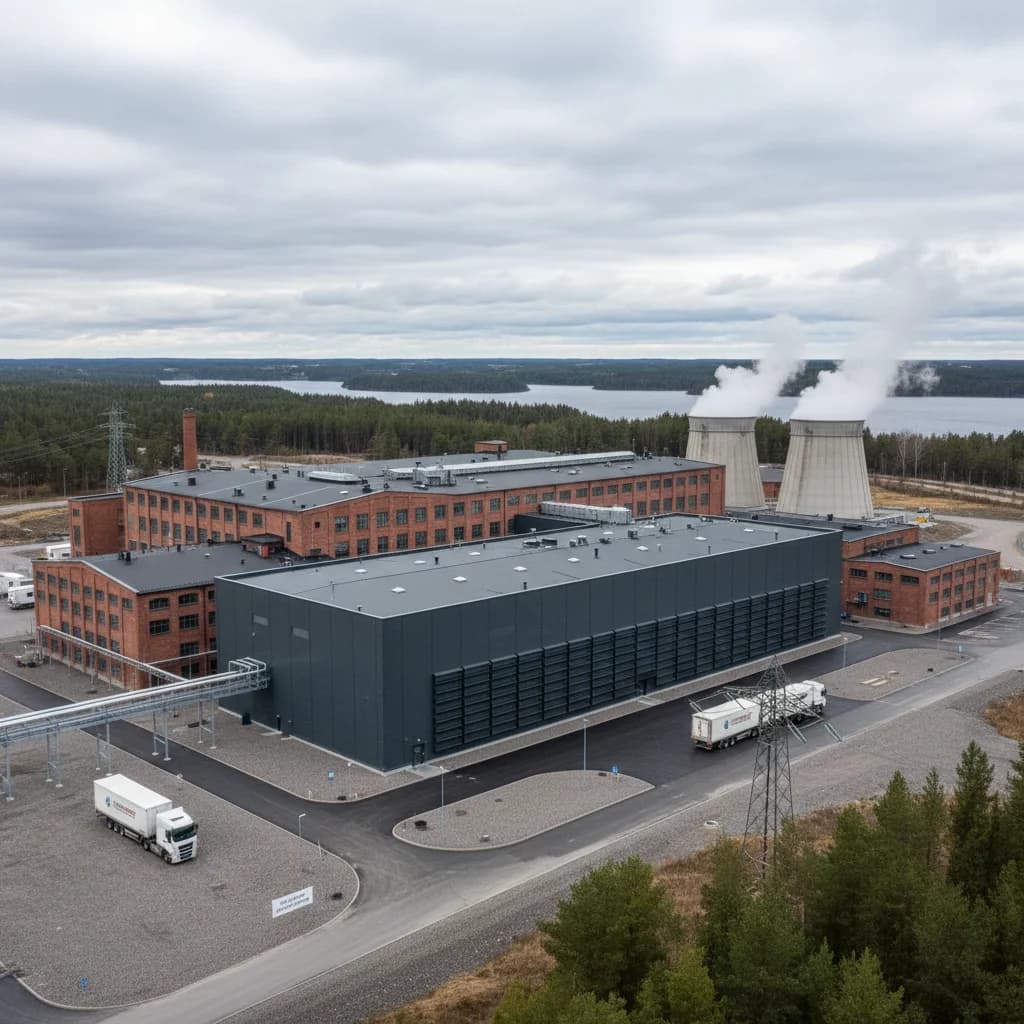
Mistral invests €1.2B to build Borlänge AI data center
French AI company Mistral plans to invest €1.2 billion to build a 23-megawatt data center in Borlänge, Sweden, together with Sweden’s EcoDataCenter, owned by real estate firm Areim. CEO and co-founder Arthur Mensch says the site will support Mistral’s AI models and its cloud service, and marks the start of a broader Nordic expansion.
Deal overview: €1.2B, 23MW, and a Nordic foothold
The project is a major European AI infrastructure commitment at a time when compute capacity is becoming a strategic asset. Mistral says it will invest €1.2 billion (about SEK 12.8–13 billion) to build 23MW of capacity. The facility is expected to employ “a few dozen” people once operational.
Mistral is partnering with EcoDataCenter, a Swedish data center operator owned by Areim. While the announcement focuses on the investment size and power capacity, the underlying message is clear: Mistral wants dedicated, controllable compute in Europe rather than relying exclusively on hyperscalers outside the region.
A repurposed industrial site: from paper mill to battery ambitions to AI
The data center will be established in premises in Kvarnsveden that previously belonged to bankrupt battery manufacturer Northvolt. Before that, the location hosted a paper mill, reflecting a broader Scandinavian trend of repurposing industrial infrastructure for energy-intensive digital workloads.
For AI data centers, site selection often hinges on grid access, cooling conditions, and the ability to scale. Sweden’s energy mix and climate can be attractive for operators aiming to reduce operating costs and improve sustainability metrics, especially as customers increasingly ask for transparent reporting on energy use and emissions.
What the compute will be used for: models and Mistral’s cloud
According to the report, the Borlänge facility will be used both to run Mistral’s AI models and to power its own cloud service. That dual use matters.
Training and serving large language models (LLMs) require different infrastructure patterns:
- Training is bursty and GPU-dense, prioritizing high-speed interconnects and large clusters.
- Inference (serving) needs reliability, cost efficiency, and the ability to scale with demand, often across multiple regions.
By investing in its own data center capacity, Mistral can better control latency, data residency, and pricing. It can also tailor hardware and networking for its workloads—typically involving GPU accelerators, high-bandwidth memory, and fast networking (often InfiniBand-class fabrics in high-end clusters). While the companies have not disclosed chip suppliers, the market for AI training remains heavily dependent on NVIDIA GPUs, with growing interest in alternatives where available.
Why it matters: Europe’s dependence on imported digital services
Mensch framed the investment as part of a broader European challenge: Europe imports more than 80% of its digital services today, and without homegrown providers for cloud and AI, that dependence could deepen.
This argument aligns with the region’s push for “digital sovereignty,” which is not only about regulation but also about infrastructure ownership. The EU’s AI Act, GDPR, and emerging rules on data governance increase the value of keeping sensitive workloads within jurisdictions that customers trust. For enterprises in the Nordics—often early adopters in industrial automation, telecom, and public-sector digitization—local compute can simplify compliance and procurement.
Competitive context: infrastructure as a differentiator for AI labs
The AI industry has entered an era where model quality is closely tied to access to compute, energy, and capital. Leading labs and platforms increasingly compete on:
- Availability of GPU capacity and cluster scale
- Cost per token for inference
- Data residency and security assurances
- Ability to offer integrated platforms (models plus APIs, tools, and hosting)
Mistral’s move mirrors a wider trend: AI developers are trying to reduce bottlenecks from cloud scarcity and price volatility. It also signals that European AI companies are not only building models but also attempting to control the stack—models, serving, and infrastructure—similar to strategies seen from major US players.
What to watch next
Key details will determine how transformative the Borlänge facility becomes for Mistral and the Nordic market:
- Timeline to commissioning and phased expansion plans
- Hardware strategy and supplier ecosystem
- Power sourcing, grid constraints, and efficiency targets (such as PUE)
- How Mistral positions its cloud offering against hyperscalers and European cloud initiatives
If executed well, the investment could strengthen Mistral’s ability to serve European enterprises with lower-latency, regionally hosted AI—and add momentum to Europe’s effort to build durable, competitive AI infrastructure.
Related Articles

SL Live Map turns Stockholm transit data into a real-time obsession
A Swedish developer has built a real-time “live map” of Stockholm’s public transport that lets users watch metro trains, commuter rail and buses move across the city. The project, called SL Live Map, pulls open transit data via Trafiklab.se and has drawn reactions ranging from train operators’ praise to users saying they watch it for hours—part utility, part digital mindfulness.
A Swedish developer has built a real-time “live map” of Stockholm’s public transport that lets users watch metro trains, commuter rail and buses move across the city. The project, called SL Live Map,...
Meta’s Nvidia Chip Buying Spree Signals a New AI Arms Race
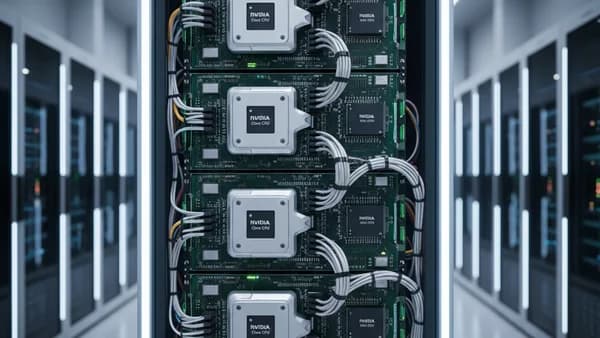
Meta Platforms is preparing to deploy millions of Nvidia chips across its AI data centers, including standalone Grace CPUs and next-generation Vera Rubin systems. The plan, described by CEO Mark Zuckerberg as a push to deliver “personal superintelligence” globally, could channel a large share of Meta’s projected AI investment—up to $135 billion by 2026—toward Nvidia.
Meta Platforms is preparing to deploy millions of Nvidia chips across its AI data centers, including standalone Grace CPUs and next-generation Vera Rubin systems. The plan, described by CEO Mark Zuckerberg as a...
Swedish startup brings AI to emergency vehicles, replacing legacy systems
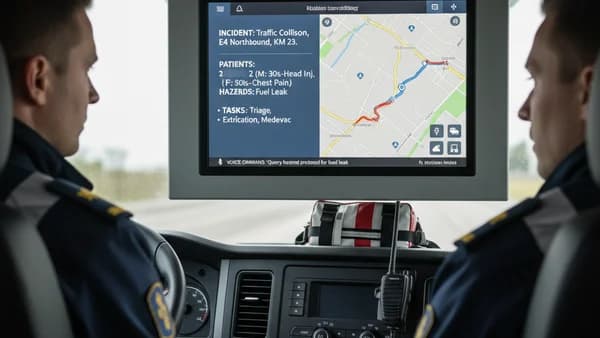
A Swedish startup is deploying AI inside emergency vehicles to replace older onboard systems and improve how crews receive, interpret, and act on operational information. The move reflects a broader shift in public-safety technology: bringing modern machine learning and real-time data fusion into fleets that still rely on fragmented, legacy software.
A Swedish startup is deploying AI inside emergency vehicles to replace older onboard systems and improve how crews receive, interpret, and act on operational information. The move reflects a broader shift in public-safety...

French prosecutors raid X as Grok faces widening probes
Paris prosecutors, backed by France’s national cyber unit and Europol, searched X’s French offices on Tuesday as an investigation launched in January 2025 broadened from alleged algorithmic bias to the company’s Grok chatbot. Authorities are examining claims that Grok generated Holocaust-denial content—illegal in France—and that it can produce sexualized AI images, including of children.
Paris prosecutors, backed by France’s national cyber unit and Europol, searched X’s French offices on Tuesday as an investigation launched in January 2025 broadened from alleged algorithmic bias to the company’s Grok chatbot....