
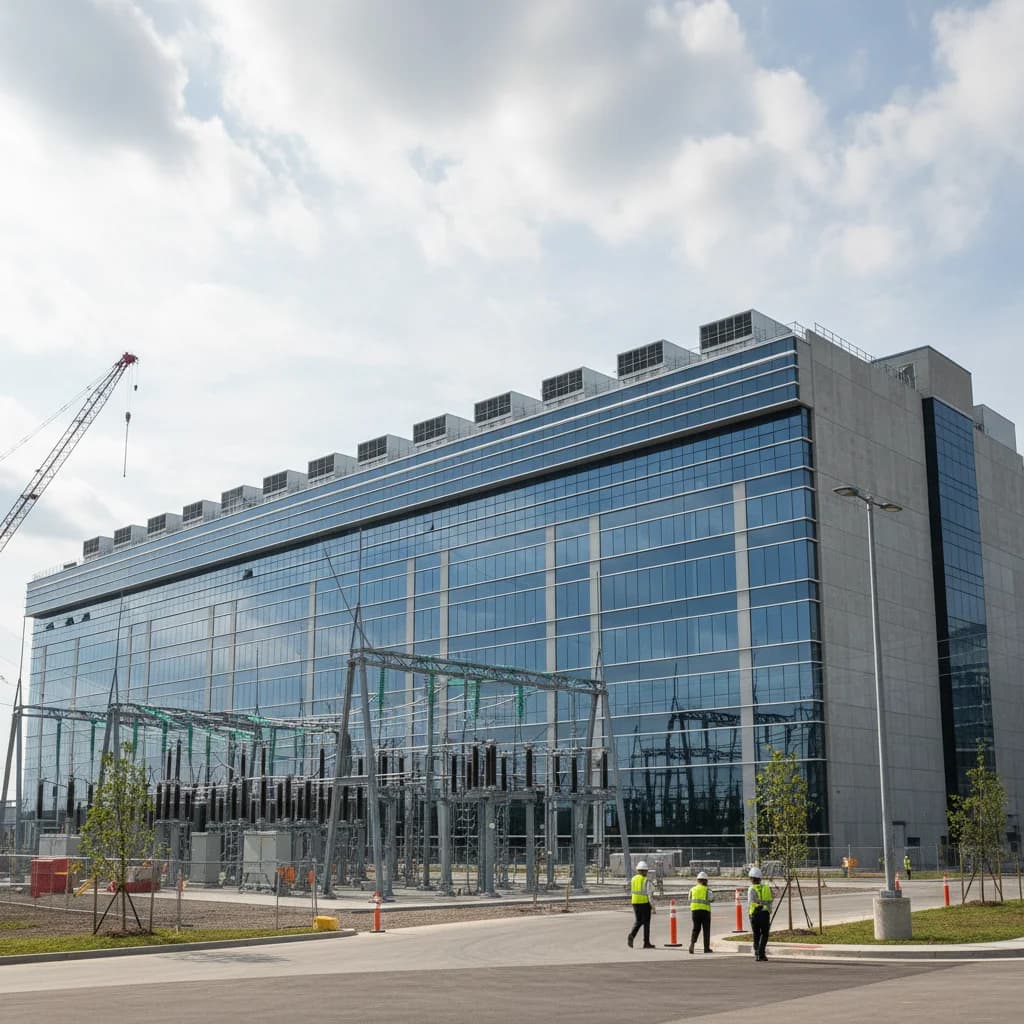
Alphabet to Nearly Double Spending to Expand AI Data Centers
Alphabet, Google’s parent company, plans a major increase in AI-related investment in 2026, nearly doubling its annual capital expenditures to expand data center capacity and infrastructure. CEO Sundar Pichai said the company is already seeing AI investments translate into revenue and broad-based growth, underscoring why Alphabet is accelerating spend.
What Alphabet said and what the numbers imply
Alphabet expects total capital expenditures of about $185 billion in 2026, compared with roughly $91 billion in 2025. The company framed the increase as necessary to build out AI data centers and the supporting infrastructure required to train and serve modern AI models at global scale.
The magnitude matters. Capital expenditure at this level typically signals multi-year commitments to:
- New and expanded hyperscale data centers
- High-density power and cooling retrofits for GPU-heavy workloads
- Network upgrades to move large model checkpoints and training data efficiently
- Specialized hardware deployments, including GPUs and custom accelerators
Pichai’s comment that AI infrastructure is “driving revenue and growth across the line” is also notable because it ties the spending directly to business outcomes rather than positioning it as purely defensive. For Alphabet, that includes Google Search, YouTube, Google Cloud, and a growing portfolio of AI products and developer services.
Why AI infrastructure is becoming the main battleground
The AI industry has entered an infrastructure arms race. Training frontier models and serving them to billions of users requires enormous compute, storage, and networking. The bottlenecks are no longer only algorithmic; they are physical and operational:
- Compute availability: Advanced GPUs remain in high demand, and lead times can be long.
- Power constraints: New AI clusters can require hundreds of megawatts, pushing grid interconnects and power purchase agreements to the forefront.
- Cooling and density: AI racks often demand liquid cooling and redesigned facilities.
- Data movement: Model training and inference depend on high-bandwidth interconnects and optimized data pipelines.
Alphabet’s planned jump in spending reflects a broader shift among hyperscalers: AI is becoming the primary driver of data center design, procurement strategy, and long-term capacity planning.
Competitive context: Google, NVIDIA, OpenAI, and the hyperscaler race
Alphabet is not making this bet in isolation. Across the AI ecosystem, infrastructure is increasingly decisive in determining who can train the best models, offer the most reliable inference, and price services competitively.
NVIDIA remains central as the dominant supplier of AI GPUs and networking gear. At the same time, Google has long pursued vertical integration through its Tensor Processing Units (TPUs), aiming to reduce dependency on third-party accelerators and optimize performance per dollar for specific workloads.
In parallel, OpenAI and Microsoft have pushed aggressive buildouts to support large-scale model training and deployment, while Amazon continues to expand AI capacity across AWS and its custom silicon roadmap. Alphabet’s spending plans indicate it intends to stay in the top tier of AI infrastructure providers, both for its consumer products and for Google Cloud customers building AI applications.
What this means for Google Cloud and enterprise AI buyers
For enterprise customers, AI capacity translates into practical outcomes: faster access to compute, more stable pricing, and better availability for training and inference. If Alphabet successfully expands capacity, Google Cloud could strengthen its position in several areas:
- Training workloads for large language models and multimodal systems
- Managed inference for latency-sensitive applications
- AI-optimized storage and networking services
- Tooling around model deployment, monitoring, and governance
However, higher capex does not automatically mean lower costs for customers. AI services are expensive to run, and pricing depends on utilization, hardware mix, energy costs, and competitive dynamics. Still, increased supply can reduce scarcity premiums and improve reliability—two pain points that have affected AI adoption.
Regulatory and sustainability pressures will shape the buildout
Large AI data center expansions increasingly intersect with policy and public scrutiny. Governments and regulators are paying closer attention to:
- Energy consumption and grid impact
- Water use for cooling
- Land use and permitting timelines
- Security and resiliency requirements for critical digital infrastructure
Alphabet will likely need to balance speed with compliance and sustainability commitments. In practice, that can mean more investment in renewable energy procurement, advanced cooling technologies, and site selection strategies that align with power availability.
The bottom line for the AI industry
Alphabet’s planned $185 billion capex level for 2026 is a clear signal that AI is no longer a feature upgrade—it is an infrastructure-driven transformation. By tying spending to measurable revenue and growth, Alphabet is betting that scale, efficiency, and availability of compute will determine winners in AI products and platforms. For the broader market, the move reinforces a new reality: the next wave of AI competition will be fought as much in data centers and supply chains as in model architectures.
Related Articles

SL Live Map turns Stockholm transit data into a real-time obsession
A Swedish developer has built a real-time “live map” of Stockholm’s public transport that lets users watch metro trains, commuter rail and buses move across the city. The project, called SL Live Map, pulls open transit data via Trafiklab.se and has drawn reactions ranging from train operators’ praise to users saying they watch it for hours—part utility, part digital mindfulness.
A Swedish developer has built a real-time “live map” of Stockholm’s public transport that lets users watch metro trains, commuter rail and buses move across the city. The project, called SL Live Map,...
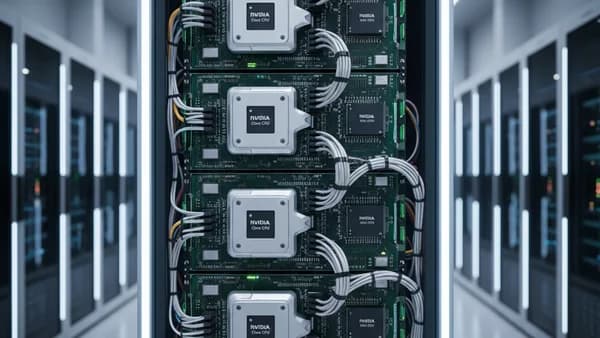
Meta’s Nvidia Chip Buying Spree Signals a New AI Arms Race
Meta Platforms is preparing to deploy millions of Nvidia chips across its AI data centers, including standalone Grace CPUs and next-generation Vera Rubin systems. The plan, described by CEO Mark Zuckerberg as a push to deliver “personal superintelligence” globally, could channel a large share of Meta’s projected AI investment—up to $135 billion by 2026—toward Nvidia.
Meta Platforms is preparing to deploy millions of Nvidia chips across its AI data centers, including standalone Grace CPUs and next-generation Vera Rubin systems. The plan, described by CEO Mark Zuckerberg as a...
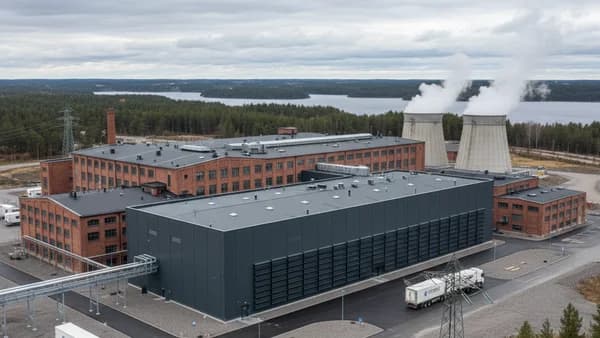
Mistral’s €1.2B Sweden Data Center Signals Europe’s AI Compute Push
French AI company Mistral plans to invest €1.2 billion to build a 23-megawatt data center in Borlänge, Sweden, together with Sweden’s EcoDataCenter, owned by real estate firm Areim. CEO and co-founder Arthur Mensch says the site will support Mistral’s AI models and its cloud service, and marks the start of a broader Nordic expansion.
French AI company Mistral plans to invest €1.2 billion to build a 23-megawatt data center in Borlänge, Sweden, together with Sweden’s EcoDataCenter, owned by real estate firm Areim. CEO and co-founder Arthur Mensch...

Swedish startup brings AI to emergency vehicles, replacing legacy systems
A Swedish startup is deploying AI inside emergency vehicles to replace older onboard systems and improve how crews receive, interpret, and act on operational information. The move reflects a broader shift in public-safety technology: bringing modern machine learning and real-time data fusion into fleets that still rely on fragmented, legacy software.
A Swedish startup is deploying AI inside emergency vehicles to replace older onboard systems and improve how crews receive, interpret, and act on operational information. The move reflects a broader shift in public-safety...