
Inside Google’s February AI announcements: Gemini upgrades, Nano Banana 2, and new impact partnerships
Google used February to showcase a broad slate of AI updates, pairing new model releases with creative-generation tools and a renewed pitch for international partnerships. In a company roundup of its recent announcements, Google framed the month’s news around “global impact,” highlighting work that spans science, education, security, and consumer products.
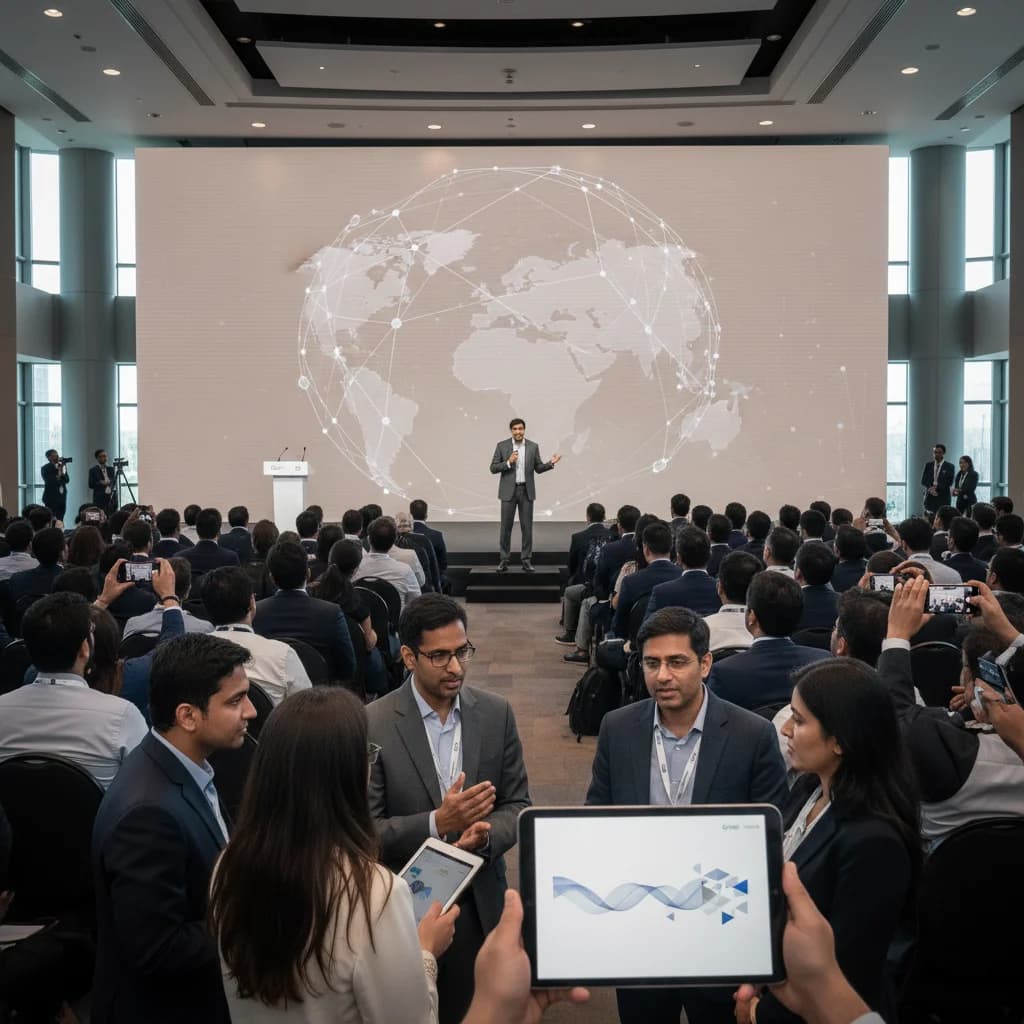
A centerpiece of the month was Google’s presence at the AI Impact Summit in New Delhi, where it announced new partnerships and investments aimed at expanding access to AI. The company said it is launching new “Impact Challenges” intended to advance scientific work and spur innovation for governments, alongside new national partnerships in India focused on AI and collaborations aimed at scaling AI solutions in science and education.
CEO Sundar Pichai opened the summit with remarks that positioned AI as the most inspiring technology he has seen, while urging leaders to push forward aggressively but responsibly. Google also tied that message to practical commitments, pointing to infrastructure investments and expanded AI skills training as ways it hopes to broaden who benefits from the technology.
On the product side, Google said it released “Nano Banana 2,” describing it as a new image-generation model that combines higher-end image quality with faster output. The company said the model is available across products including the Gemini app and Google Search, and that developers can build with it as well. Google also pointed to ongoing work on SynthID, its system for helping identify AI-generated content.
Google also leaned into creative tooling. It announced Lyria 3 for music generation inside the Gemini app, which it said can produce a 30-second track from a text description or from an uploaded photo or video, along with custom cover art. Google added that ProducerAI is joining Google Labs, positioning it as a companion for music creation tasks such as refining lyrics or melodies.
For visual creators, Google said it is bringing more of its image and video capabilities into Flow, a workspace meant to support generating, editing, and animating assets in one place. The company described a workflow where users can create high-fidelity images and then reuse them as building blocks for video generation, supported by an updated interface for managing and searching assets.
The company also highlighted advances in its flagship models. It announced Gemini 3.1 Pro as a more capable baseline model for complex problem-solving and said it delivers more than double the reasoning performance of “3 Pro.” Google positioned the model as useful when users need more than a quick answer, such as synthesizing information, producing visual explanations, or coordinating creative work, and said it is available across developer, enterprise, and consumer channels.
Google additionally described a major upgrade to Gemini 3 Deep Think, a variant it said was developed with input from scientists and researchers and tuned for science and engineering problems where data is messy and tradeoffs are common. The updated Deep Think is available in the Gemini app for Google AI Ultra users, while researchers and enterprises can request early access through the Gemini API.
Beyond models, Google used February to underline its security and real-world deployment narrative. At the Munich Security Conference, President of Global Affairs Kent Walker argued for a more collaborative approach to “digital resilience” in an AI era where threats are evolving faster than traditional responses. Google also spotlighted a sports application: an AI video analysis tool built with Google Cloud and Google DeepMind to help Team USA and U.S. Ski & Snowboard athletes analyze motion from 2D video, even through bulky winter gear, and return feedback in minutes.
The roundup closed with a marketing note as well, pointing to a national in-game ad during football’s biggest weekend that depicted a mother and son using Gemini to imagine how a new home could look and feel. Google said the spot, titled “New Home,” was named the top in-game ad in an annual ranking by the Kellogg School.